
The biogas formation process
Methane is formed during complex chemical processes in mixed populations of bacteria, which belong to the group of archaea and are known as methanogenic organisms.
The biomass decomposition process can be divided into four stages:
Stage I: Aerobic hydrolytic bacteria transform high-molecular-weight organic substances (proteins, carbohydrates, fats, cellulose) into low-molecular-weight compounds, such as sugars, amino acids, fatty acids, and water, using enzymes. The enzymes produced by hydrolytic bacteria attach to the external wall of bacteria (known as exoenzymes) and break down the organic components of the substrate into small water-soluble molecules. Polymers (high-molecular-weight compounds) are converted into monomers (individual molecules). This process, called hydrolysis, occurs slowly and depends on extracellular enzymes, such as amylases, proteases, lipases, etc. The process is influenced by the pH level (optimal pH is 4.5-6) and the residence time in the reservoir.
Stage II: Acid-producing bacteria then further break down the molecules. Some molecules penetrate the bacteria cells, where they continue to degrade. In this process, aerobic bacteria that consume any remaining oxygen are involved, creating anaerobic conditions necessary for methane-producing bacteria. At a pH level of 6-7.5, primarily unstable fatty acids (acetic, formic, butyric, propionic), low-molecular-weight alcohols (ethanol), carbon, and gases (carbon dioxide, hydrogen, hydrogen sulfide, and ammonia) are produced. This stage is called the oxidation phase (pH decreases).
Stage III: Hydrogen-producing bacteria from organic fatty acids produce precursor compounds for methane formation: acetic and formic acids, carbon dioxide, and hydrogen. These bacteria, which reduce the carbon content (in the form of organic acids), are highly temperature-sensitive.
Stage IV: In the final stage, methane, carbon dioxide, and water are produced by methanogenic bacteria from acetic and formic acids, carbon, and hydrogen. 90% of all methane is produced in this stage, with 70% of methane originating from acetic acid. Therefore, the formation of acetic acid (i.e., Stage III and, to a lesser extent, Stage II) is a determining factor for the rate of methane production. Methanogenic bacteria are exclusively anaerobic.
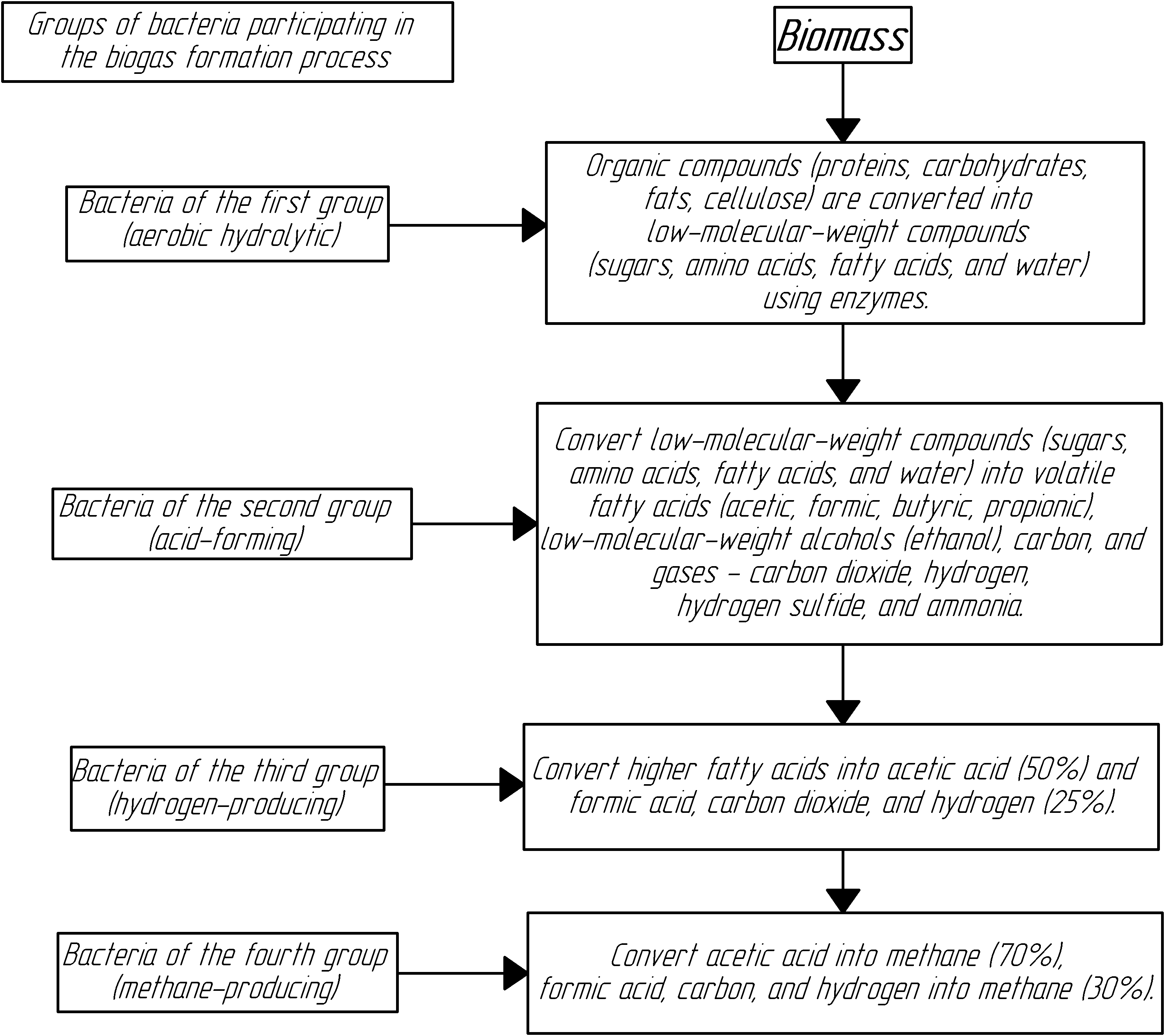
During the process of decomposition, the products of digestion (metabolites) produced by each group of bacteria serve as nutrients for the subsequent group of bacteria.
The breakdown of organic matter into its individual components and its conversion into methane can only occur in a moist environment because bacteria can only process substances in a dissolved form. Therefore, adding water is necessary for fermenting solid substrates.
The phased decomposition of organic matter occurs unevenly because different groups of bacteria work at different rates. Acid-producing bacteria, which break down organic matter, work the fastest, typically taking several hours to 2 days. Ideally, a dynamic equilibrium in the concentration of substances is established between the supply of nutrients and their decomposition between the different phases. The most common mistake is overfeeding bacteria with a substrate that decomposes quickly, leading to the accumulation of acids due to the activity of acid-producing bacteria. This can result in a sharp drop in pH levels that other types of bacteria cannot tolerate. Additionally, excessive concentrations of the produced metabolite can hinder the growth of the bacterial group responsible for its production.

Chemical Composition of Biogas:
The dynamic equilibrium is also determined by the ease of substrate breakdown. For example, sugars and starch, due to their simple structure, break down very quickly and require only a short residence time in the fermenter. The more complex the structure of the substrate, the longer the decomposition process will take. Cellulose and hemicellulose have branched structures and decompose slowly. Lignin (a woody substance in plants) is very resistant to bacterial degradation, even to acids. The speed of substrate decomposition directly impacts the required fermentation time.
Effective methanogenic fermentation of organic substances requires the following four main conditions:
- An anaerobic atmosphere (absence of oxygen).
- Appropriate temperature for the fermenting mass.
- A weakly alkaline environment (pH).
- The presence of methane-producing bacteria.
The extraction of methane from the fermenting material only occurs in anaerobic conditions, meaning when there is no access to oxygen (air). Therefore, fermentation must take place in specialized tanks, closed fermentation chambers, or similar equipment. The FOS/TAC ratio is an indicator used to analyze the fermentation process.
