Wastewater treatment
Implementation of efficient wastewater treatment systems is one of the most crucial steps in preserving the environment.
Wastewater treatment is the process of removing pollutants and contaminating substances from wastewater generated in urban and industrial areas as a result of human activities. Wastewater contains mineral, organic, plant, animal, artificial, and biological substances.
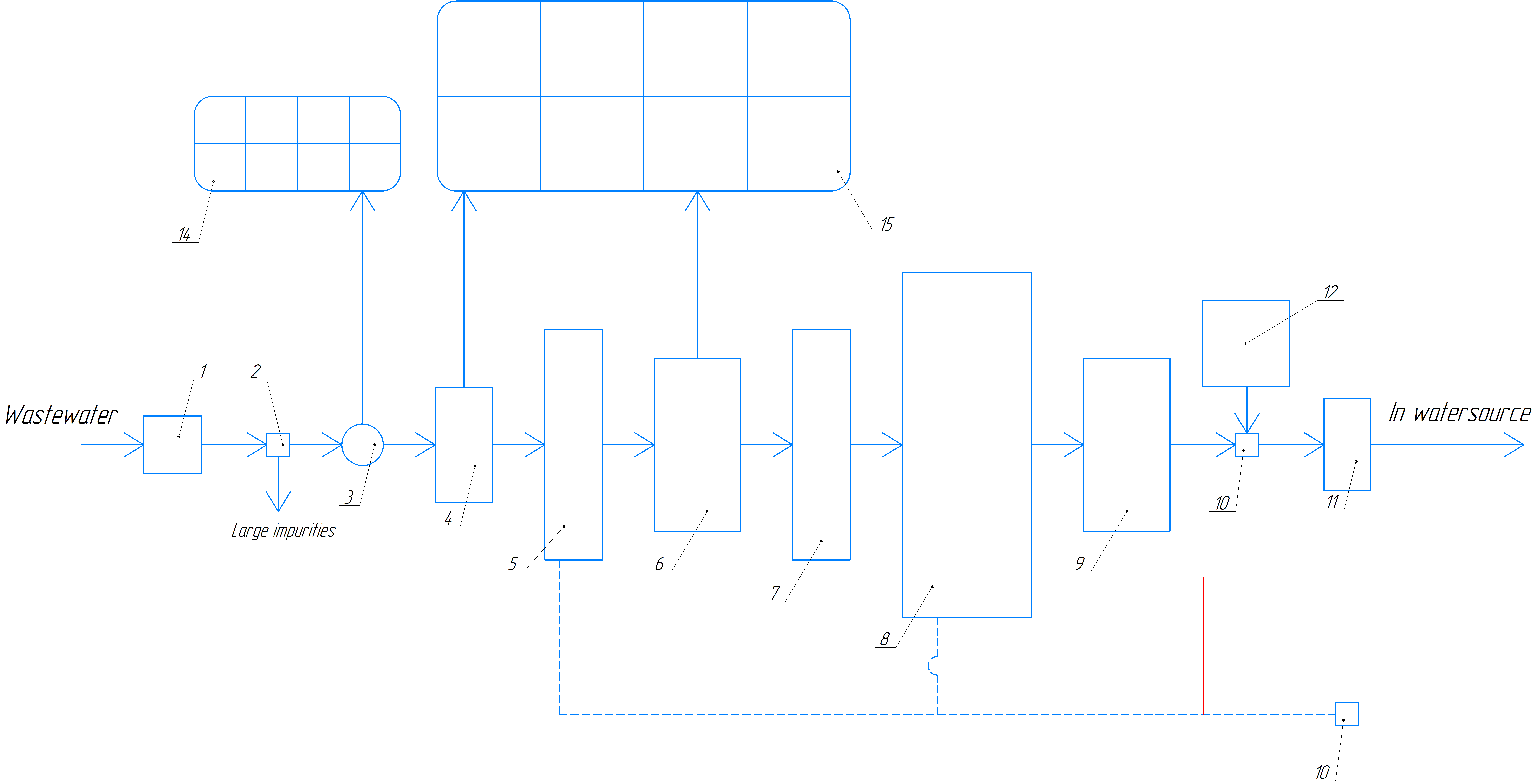
The wastewater treatment process:
- Preliminary Treatment. In this stage, wastewater passes through screens that remove large solid particles such as branches and plastics.
- Sedimentation. Wastewater enters large reservoirs where solid particles settle down. The formed sludge is separated from the liquid, which proceeds for further treatment.
- Biological Treatment. This stage involves the use of microorganisms (bacteria and fungi) that decompose organic matter in wastewater at the biological level.
- Chemical Treatment. Chemical reagents are used to remove various pollutants such as phosphates and heavy metals.
- Disinfection. In the final stage, wastewater undergoes disinfection, which eliminates bacteria and viruses that might remain after previous treatment processes.
When characterising wastewater, the following terms and concepts are used:
- Suspended Solids. These are the contents of solids that can be settled and measured. A conical container called the Imhoff cone with a height of 40 cm is used to determine their quantity. 1 dm3 of wastewater is poured into the cone, and the height of the settled solids is measured after 2 hours of settling.
- BOD (Biochemical Oxygen Demand). BOD5 is the biochemical oxygen consumption by bacteria present in wastewater over a 5-day incubation period at 20°C. Before determining BOD5, the initial dissolved oxygen content (8-9 mg O2/dm3) of the sample is measured. Then, after a 5-day incubation at 20°C, the dissolved oxygen content of the sample is measured again, and the difference between the two measurements gives the BOD5 value.
- COD (Chemical Oxygen Demand). COD is the chemical requirement for oxygen, which is determined by the oxidation reaction of a strong oxidising agent with organic and inorganic substances in wastewater. Potassium permanganate (KMnO4) or potassium dichromate (K2Cr2O7) is used as a strong oxidant.
Principle scheme of material flows during biological wastewater treatment: