Biogas Purification
Biogas is a multi-component gas produced through the anaerobic digestion of biomass (organic waste, energy crops, livestock waste, and industrial waste) under the influence of bacteria. Biogas typically contains methane (CH₄ – 50–70%), carbon dioxide (CO₂ – 30–45%), hydrogen sulfide (H₂S – 10–30,000 mg/m³), water (H₂O – 0–10%), nitrogen (N₂ – 0.01–5%), hydrogen (H₂ – 0–1%), ammonia (NH₃ – 0.01–2.5 mg/m³), and oxygen (O₂ – 0.01–2%). The presence of these impurities significantly reduces the quality of biogas as a fuel, causing corrosion of welds and potentially leading to negative consequences during its use, including electricity and heat generation, technological transportation of biogas, and upgrading to biomethane. Therefore, removing impurities from biogas is essential for the reliable operation of equipment and its long-term service life.
Removal of Condensate and Hydrogen Sulfide from Biogas
The required level of biogas purification depends on its intended application: combustion for electricity generation (generation and cogeneration, together with heat production), heat generation (in boilers equipped with special burners), upgrading to biomethane (injection into the gas grid), or production of biofuel (bioLNG).
Biogas Purification Standards Before Use
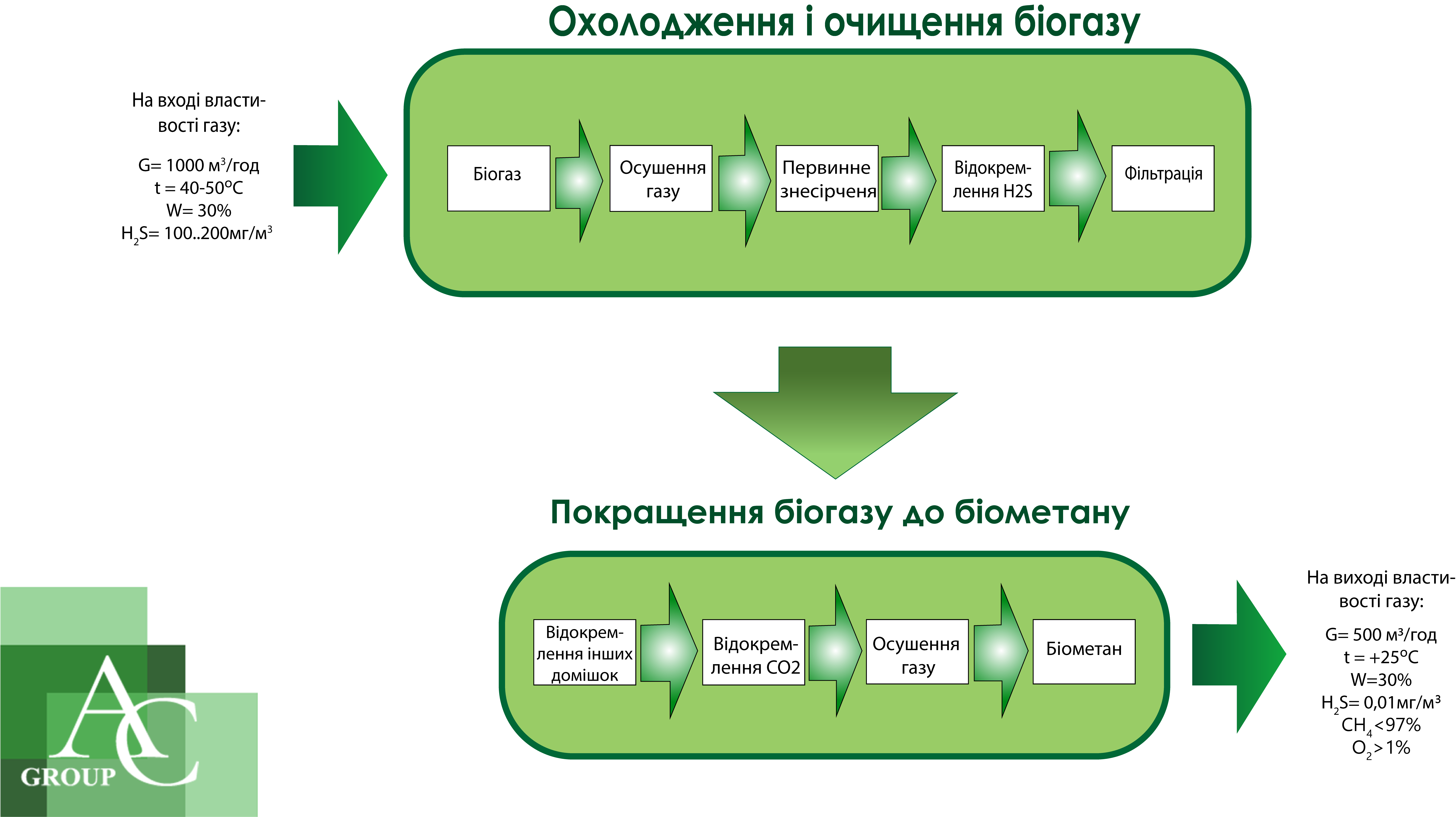
For example, when biogas is used for heat generation in gas-fired boilers (such as DKVr, KE, etc.), the restrictions generally apply only to the H₂S concentration (no more than 100–500 ppm). There is no need to remove excess moisture or carbon dioxide in this case. When biogas is used in cooking stoves, higher purification requirements apply, particularly for H₂S and CO₂ removal.
When biogas is combusted in gas piston engines (Jenbacher and Caterpillar cogeneration units), there are specific requirements for H₂S content (typically no more than 200 ppm), as well as for excessive moisture. Condensation must be prevented.
The most stringent requirements for biogas purification apply when it is injected into the natural gas grid or used directly as a vehicle fuel. In this case, biogas must be upgraded to natural gas quality, i.e. biomethane, with a CH₄ content of more than 97% and an O₂ content of less than 1%. For each specific case, the applicable technical requirements must be obtained from the relevant gas distribution company.
The first step in biogas purification is cooling and drying, i.e. removing water. The presence of H₂O is highly undesirable and can lead to rapid wear of gas utilization equipment, corrosion of pipelines (which is also affected by the presence of hydrogen sulfide), and corrosion or malfunction of shut-off and control equipment, including valves, taps, and gate valves.
Biogas leaving the digester or a municipal solid waste landfill typically has a relative humidity of 100%. The amount of water vapor it contains depends on the temperature and is approximately 40 g/m³ at 35°C.
The next step is to remove excess condensate and dry the biogas.
CONDENSATION
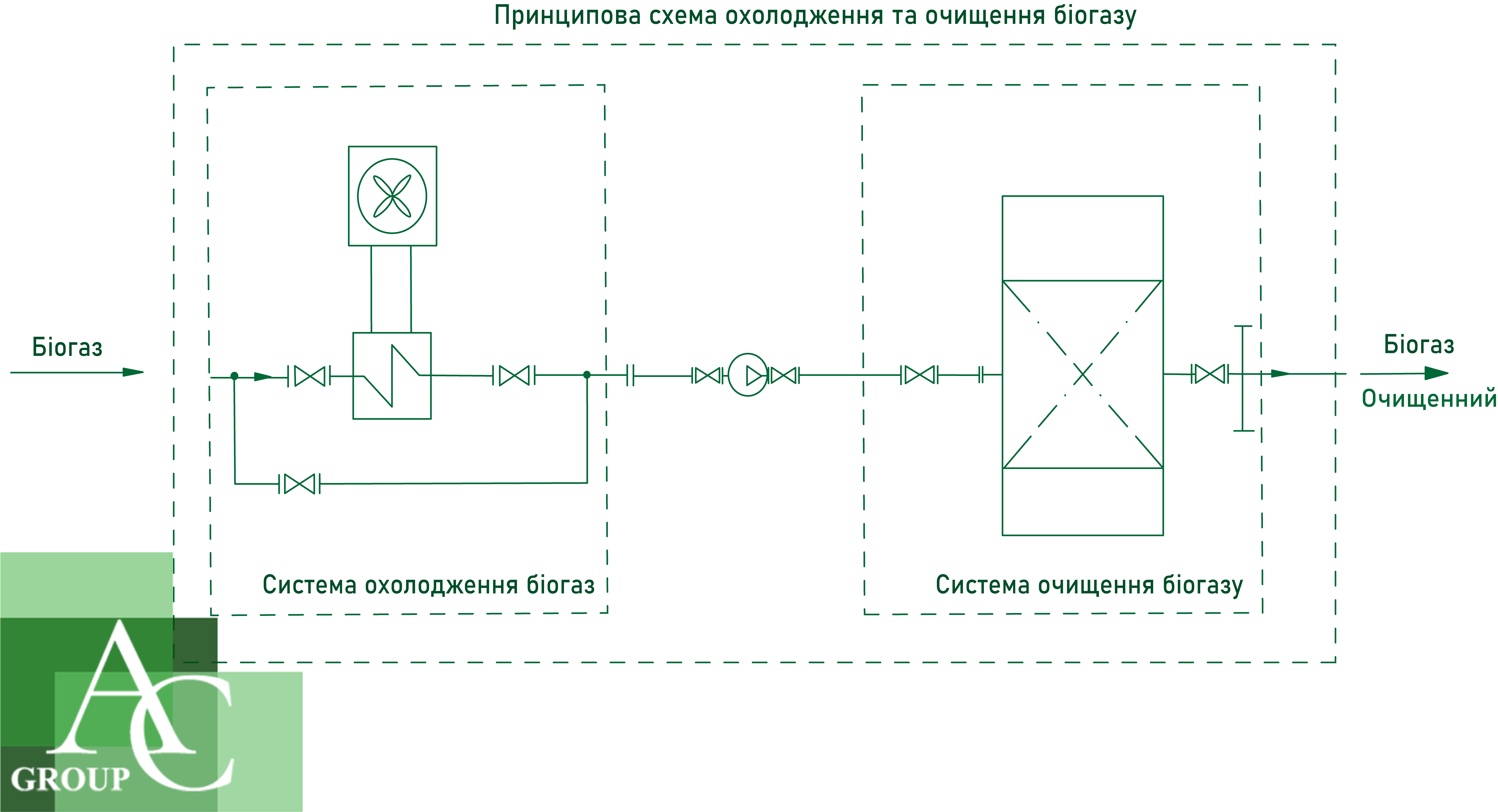
The biogas produced, which has a high moisture content, is cooled on the surfaces of heat exchangers and gas pipelines. The resulting condensate is collected and separated at the lowest point of the gas pipeline slope. In this process, a sufficiently long gas pipeline and a low temperature are crucial factors. When constructing biogas plants, AC-GROUP uses integrated gas cooling equipment for biogas cooling. If the biogas is compressed before cooling, even more water can be removed, as the condensation temperature of the biogas can be lowered further.
Once the biogas has been dried and excess moisture removed, it must be purified from hydrogen sulfide (H₂S). Even in small concentrations, hydrogen sulfide is hazardous to human health: it can irritate the skin, eyes, and respiratory tract, including causing coughing. It also leads to rapid wear and corrosion damage to generators, gas-water heat exchangers, and shut-off and control equipment. Therefore, H₂S removal is the highest priority in the biogas purification process.
There are several methods of desulfurization:
- Biological desulfurization inside the digester (internal);
- Catalytic desulfurization using activated carbon;
- Biological desulfurization outside the digester (external);
- Desulfurization through sulfide precipitation;
- Desulfurization using iron chelates;
- Desulfurization using iron-based purification media.
CATALYTIC DESULFURIZATION USING ACTIVATED CARBON
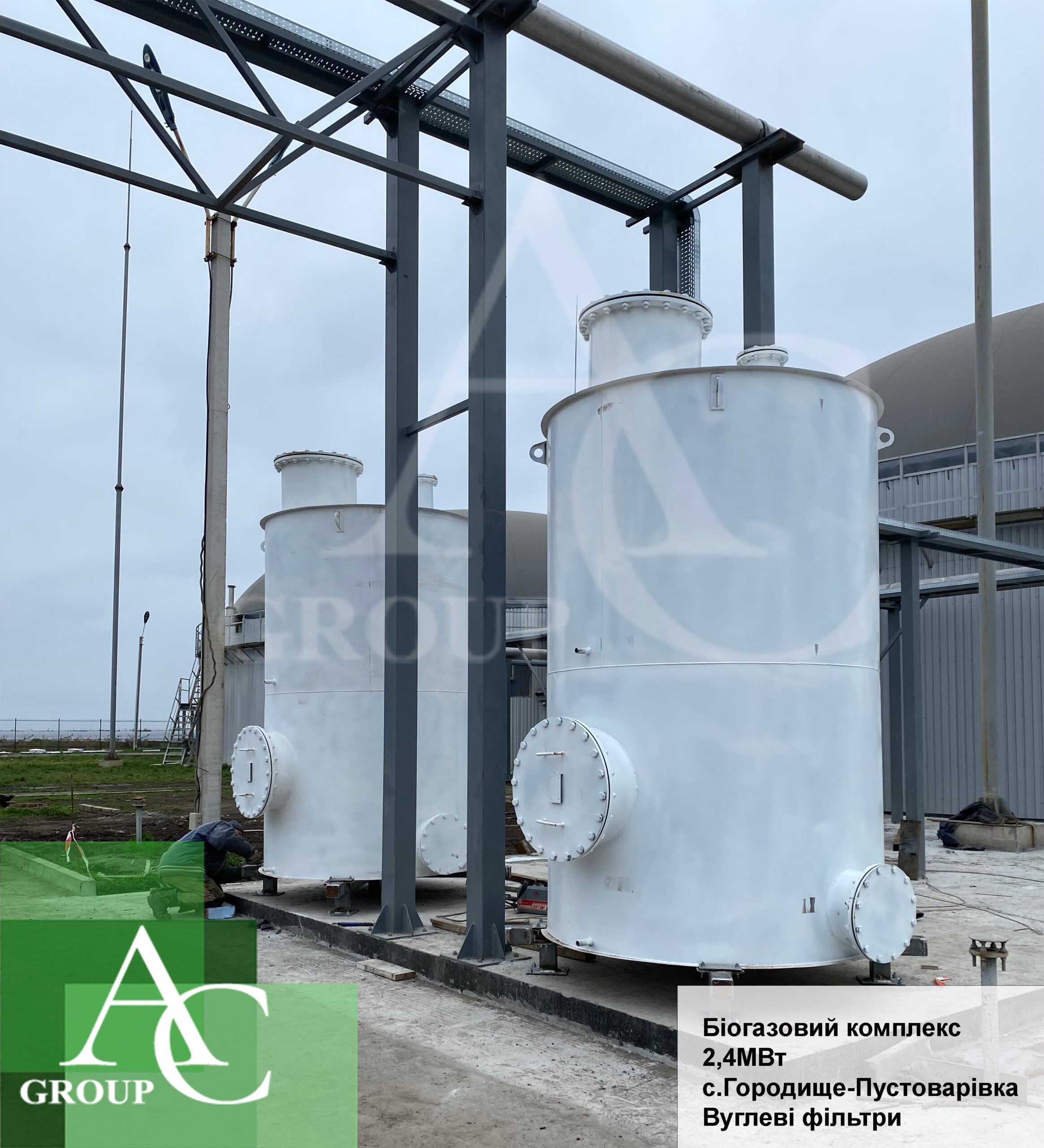
According to our process engineers, the most effective method for removing sulfur from biogas is the use of specially treated granular activated carbon. This technology is applied at biogas plants with low to medium hydrogen sulfide concentrations (up to 500 ppm), depending on the type of organic material used for biogas production.
This technology uses impregnated or doped activated carbon.
Technical Specifications of the Carbon Filter Media
This technology is primarily intended for final desulfurization after biological hydrogen sulfide removal and before pressure swing adsorption (PSA). Higher H₂S concentrations in biogas result in faster saturation of the activated carbon. For this reason, the technology is generally not economically viable when treating large amounts of H₂S.
As a rule, the activated carbon is replaced every 2–4 years and disposed of by thermal treatment. Therefore, AC-GROUP specialists recommend using this purification method for low H₂S concentrations, with the equipment configuration and piping arrangement adjusted accordingly.
Biogas Upgrading to Biomethane
The main target component removed during the upgrading of biogas to biomethane quality is carbon dioxide (CO₂ – 30–45%). The technology used for CO₂ removal is a key factor in the overall purification and upgrading process.
Additional purification stages include the pre-removal or final polishing of impurities, primarily H₂S, VOCs, and moisture. Due to its physical properties, carbon dioxide affects the calorific value, density, and heat of combustion of biogas.
| Gas Type | Gas Composition, % | Gas Density, kg/Nm³ | Higher Heating Value of Gas – Qᵥᵣ | Wobbe Index – Wᵣ | ||||||||||
| CH4 | C2H6 | C3H8 | CnHm | CO2 | H2S | N2 | O2 | MJ/Nm³ | kWh/m³ | MJ/Nm³ | kWh/m³ | |||
| Natural Gas | Min. Quality | 90,0 | 0,1 | 0,1 | 0,1 | 0,01 | 0,001 | 0,01 | 0 | 0,7 | 36,20…38.30* | 10,06…10,64* | 41,28…47,38* | 11,47…13,16* |
| Max. Quality | 99,0 | 7,0 | 3,0 | 3,0 | 2,0 | 0 | 5,0 | 0,02 | 0,2 | 38,85…41,10** | 10,80…11,42** | 48,36…57,87** | 13,43…16,08** | |
| Average Quality | 96,28 | 1,21 | 0,7 | 0,5 | 0,09 | 0,0 | 1,1 | 0,009 | 0,71 | 37,99 | 10,55 | 49,73 | 13,81 | |
| Biogas | Min. Quality | 45 | – | – | – | 55 | – | – | 0,5…1 | 1,41 | 17,91 | 4,98 | – | – |
| Average Quality | 55 | – | – | – | 45 | – | – | 1,28 | 21,89 | 6,08 | – | – | ||
| Max. Quality | 65 | – | – | – | 35 | – | – | 1,16 | 25,87 | 7,19 | – | – | ||
| Biomethane | Min. Quality | 95 | – | – | – | 5 | – | – | 0,5…1 | 0,78 | 37,80 | 10,5 | – | – |
| Average Quality | 97 | – | – | – | 3 | – | – | 0,76 | 38,60 | 10,72 | – | – | ||
| Max. Quality | 98 | – | – | – | 2 | – | – | 0,74 | 39,00 | 10,83 | – | – | ||
Membrane Separation
Membrane separation is generally divided into two main types: “gas–membrane–gas” (“dry” membranes) and “liquid–membrane–gas” (“wet” membranes).
At the facility in the Chernihiv region, “dry” membrane technology is used. It is based on creating a pressure difference on both sides of the membrane. Gas molecules (CO₂ and H₂S) pass through the membrane, while CH₄ molecules are retained. “Dry” membranes operate at either high pressure (>20 bar) or medium pressure (8–10 bar).
In the case of “wet” membranes, absorbents (amines) are used to absorb CO₂, which diffuses through the membrane. The process takes place at low pressure, close to atmospheric pressure.
Before upgrading, the biogas is compressed and dried. After separation, additional purification of the biomethane from H₂S is required.
Once the biogas has been upgraded to biomethane quality, an odorant is added. An odorant is a substance added to gas to give it a strong, distinctive smell, primarily as a safety measure, allowing gas leaks to be detected. The resulting biomethane can then be injected into the gas grid and used in the same way as natural gas.
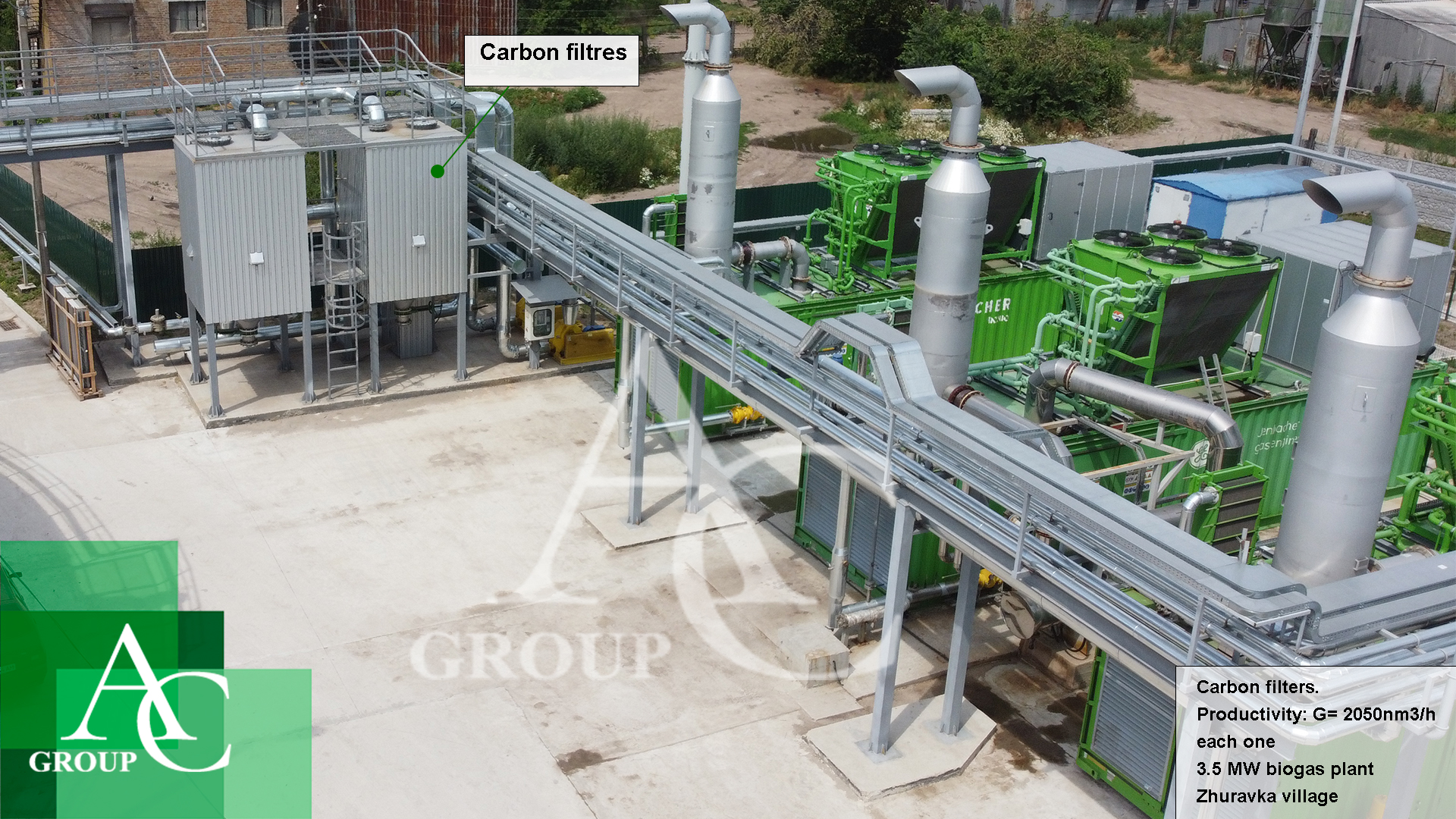
The equipment for biogas purification and drying that we have used at various facilities has been tested and proven at Ukrainian plants.
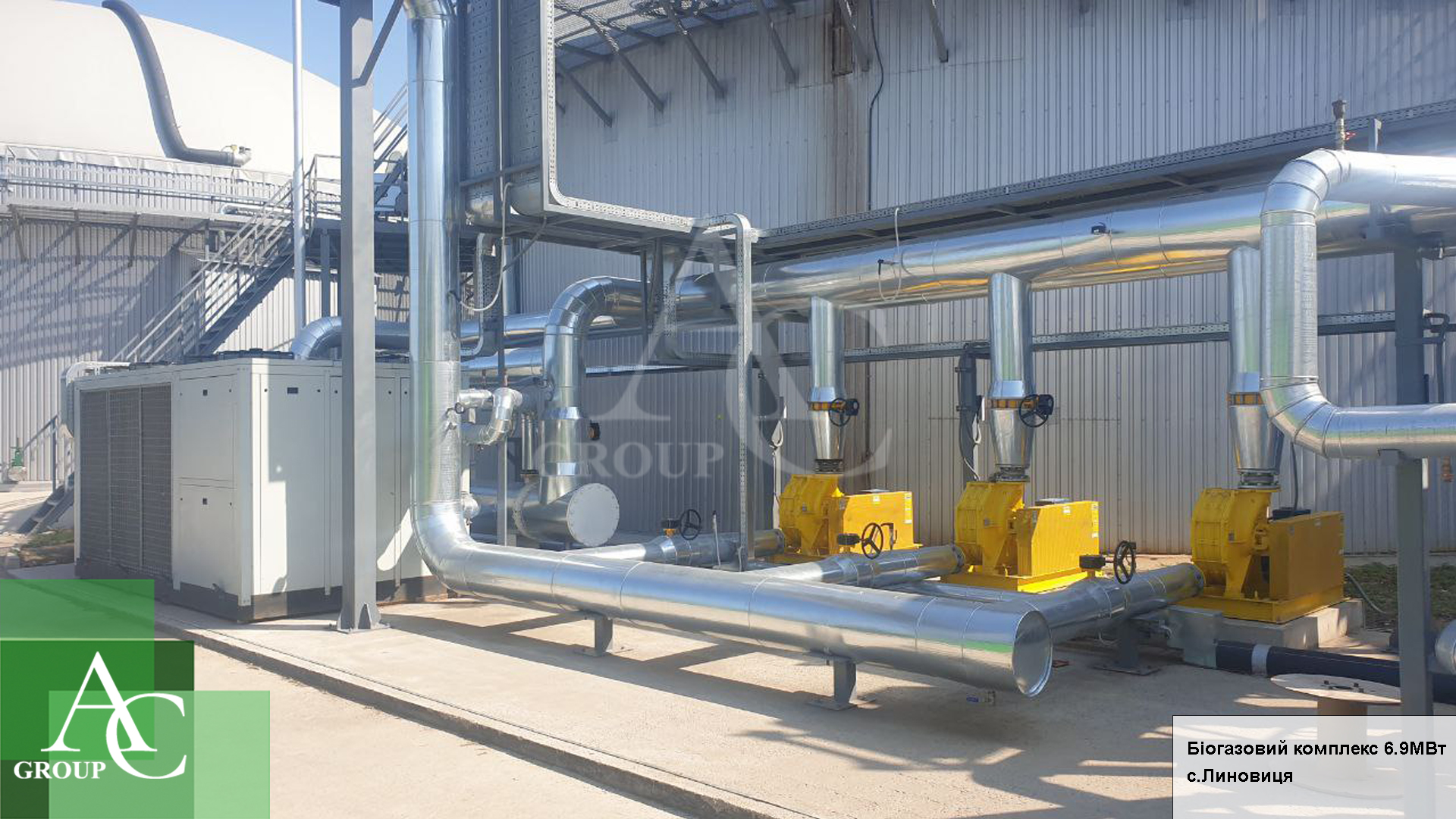
Facilities Where Biogas Purification Equipment Has Been Installed
The equipment has proven its quality and reliability through successful operation. The equipment used in these systems is supplied from EU countries, including Belgium, Germany, and Italy. All equipment has European quality certification and a high level of energy efficiency.
The AC GROUP team can select and supply other equivalent equipment for your biogas plant according to your specific requirements. In addition, we have the appropriate technologies for producing biogas from a wide range of feedstocks, including livestock and agricultural waste, energy crops, and industrial waste.
AC GROUP can assist you with the implementation of a turnkey biogas plant construction project. Invest in biogas today, because with us it is RELIABLE, PROFESSIONAL, and EFFICIENT!