
Technology and Prospects for Vinegar Production
What is Vinegar?
Vinegar is an acidic product formed through the fermentation of alcohol by bacteria known as Acetobacter. Vinegar contains acetic acid, which gives it its characteristic sour taste and preservative properties.
It has a sharp taste and distinctive aroma, making it a popular ingredient in cooking and various other industries.
- Vinegar is used as a natural food preservative. It can lower pH and inhibit the growth of bacteria and mould.
- It is used in fermentation, vegetable and fruit preservation, pickling, and other food preservation methods.
- Vinegar is an important ingredient in many cuisines around the world. It is used to enhance the taste and aroma of dishes.
- Some studies indicate that vinegar may have certain health benefits. For example, it may help regulate blood sugar levels and improve digestion.
- Vinegar is used in traditional medicine to treat various skin conditions and inflammation and to regulate appetite.
- It is used in the cosmetics industry in the production of shampoos, conditioners, and skincare products.
- Vinegar is used for household cleaning, odour removal, and disinfection.
Table vinegar is an important ingredient in cooking, the food industry, and other fields. It provides flavour and preservative properties and may also have certain health benefits.
Types of Vinegar Made from Food Raw Materials According to Regulatory Standards
Vinegar made from food raw materials is an aqueous solution of acetic acid obtained by the biochemical method of aerobic oxidation of food-grade alcohol-containing raw materials by acetic acid bacteria, followed by pasteurisation, clarification, filtration, and packaging.
Alcohol vinegar is vinegar obtained by the aerobic oxidation of rectified ethyl alcohol produced from food raw materials by acetic acid bacteria.
Flavoured vinegar is vinegar obtained by adding extracts or infusions of plant-based raw materials or spices, natural food flavouring substances or substances identical to natural flavourings, fresh or dried spices or plant raw materials, fruit juices, or honey to alcohol vinegar.
Apple vinegar is vinegar obtained by the oxidation of apple wine materials or fermented apple juices by acetic acid bacteria.
Wine vinegar is vinegar obtained by the oxidation of grape wine materials, fermented juices, extracts, or piquets by acetic acid bacteria.
Quality Requirements for Vinegar
According to DSTU 2450:2006 “Vinegars Made from Food Raw Materials. General Technical Conditions”, vinegars must comply with established organoleptic characteristics and meet the specified physicochemical parameters.


Main Stages of Vinegar Production
The main stages of vinegar production may vary depending on the production method. However, the general production process can be described as follows:
1. Raw Material Preparation
Vinegar production can use various raw materials, such as fruit juices, wine, alcoholic beverages, or alcohol.
The raw materials must be clean and comply with established quality standards.
2. Fermentation
The raw material undergoes a fermentation process in which microorganisms, usually acetic acid bacteria, convert alcohol into acetic acid.
This process takes place under controlled conditions with a sufficient supply of oxygen and an optimal temperature.
3. Fermentation Time
The fermentation time depends on several factors, including the type of raw material, the microorganisms used, and the desired acidity level of the vinegar.
The fermentation process generally takes several weeks to several months.
4. Filtration and Purification
After fermentation is complete, the vinegar liquid undergoes filtration and purification to remove sediment and unwanted impurities.
This stage helps produce clean and clear vinegar.
5. Maturation and Stabilisation
Some types of vinegar may require additional maturation to improve their taste and aroma.
After maturation, the vinegar undergoes stabilisation to prevent further fermentation and maintain its quality.
6. Filling and Packaging
The vinegar is filled into bottles or other containers in accordance with established standards.
The packaged vinegar is then ready for distribution and use in cooking and other industries.
General Production Flow
Raw material preparation → Fermentation → Filtration and purification → Maturation → Stabilisation → Filling and packaging → Finished vinegar
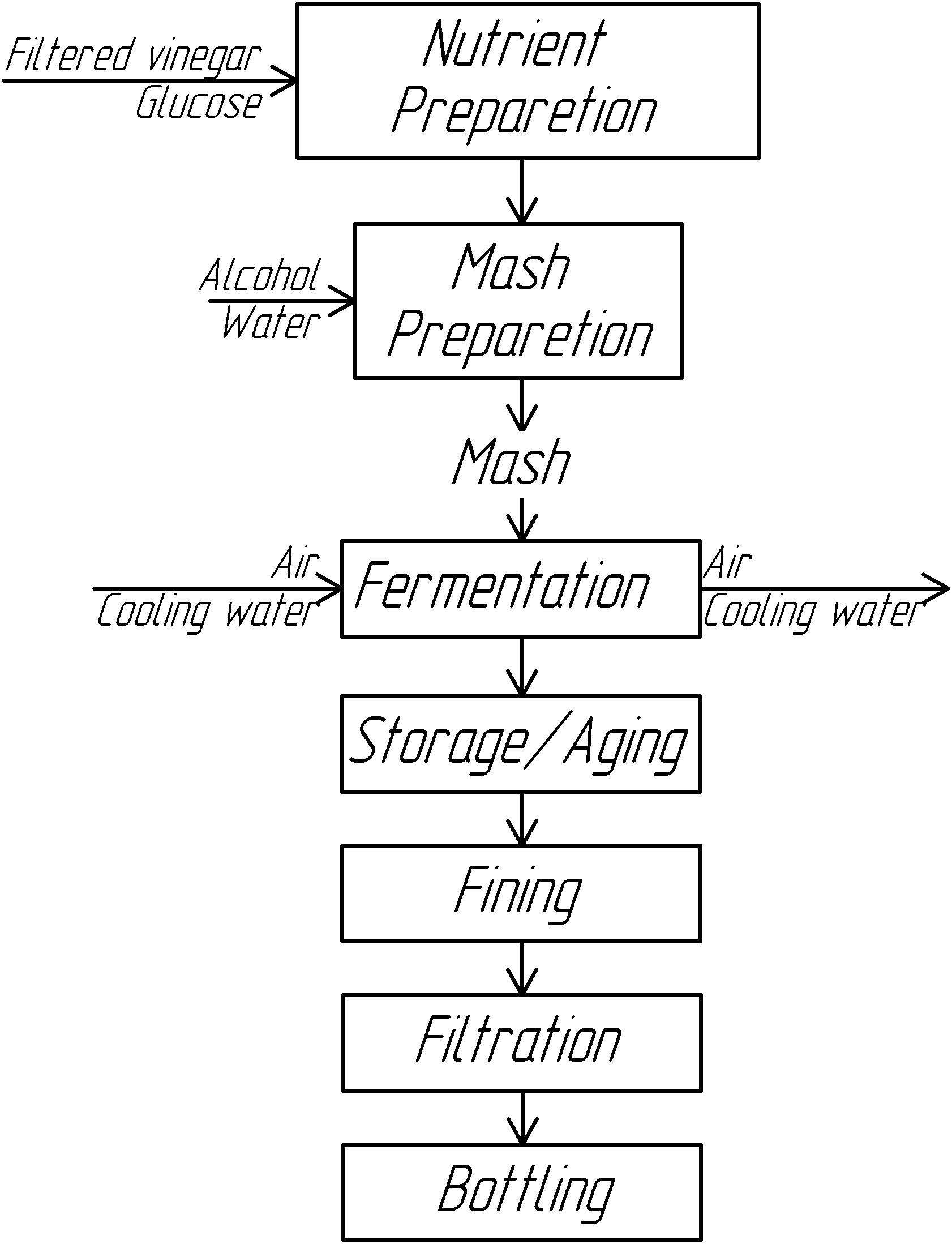
Consumption of raw materials and auxiliary materials for the production of 1,000 liters of vinegar

The prospects for the development of vinegar production in Ukraine are positive due to the availability of diverse raw materials, including fruits, berries, and grains. The growing demand for natural and organic products creates additional opportunities for the development of this industry.
In addition, Ukraine has the potential to become an important vinegar exporter due to its raw material resources and production capacity, enabling it to meet demand for vinegar both in the domestic and international markets. Through continuous improvement of vinegar production technologies and the implementation of modern quality control methods, Ukrainian producers can increase the efficiency and competitiveness of their products.
Government support for agriculture and the food industry contributes to the development of vinegar production and the attraction of investment. The future success of the industry depends on the implementation of modern technologies, quality control, and effective promotion of products in domestic and international markets.
